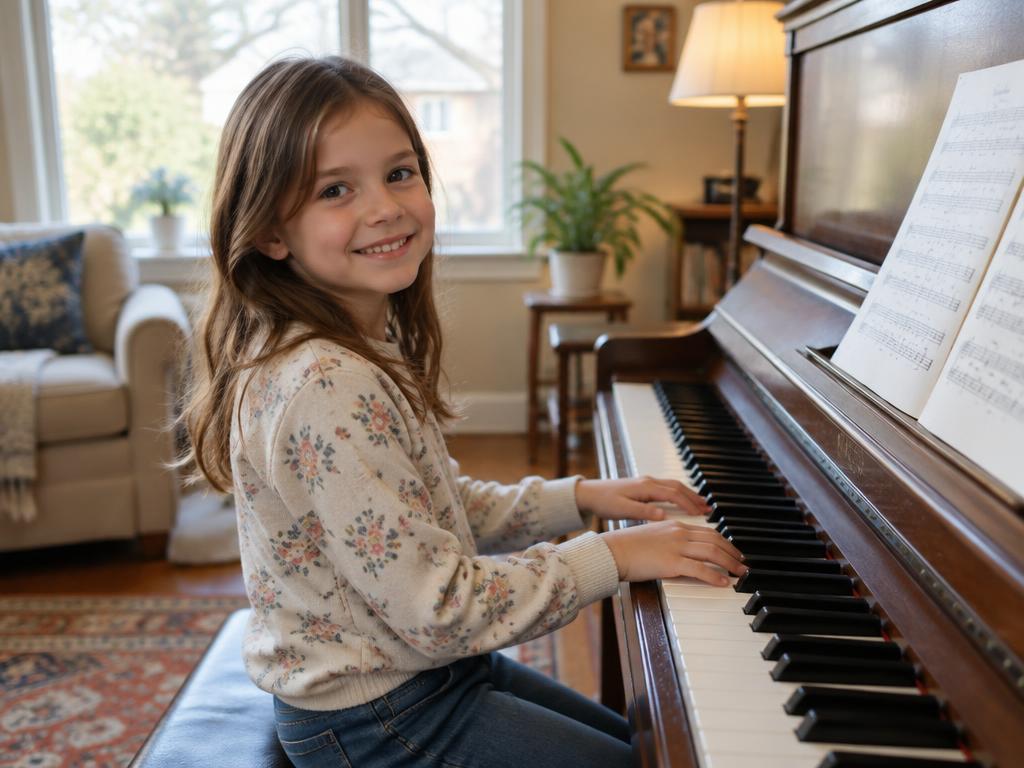
Piano brings melody, harmony, and rhythm together in a way students can see and hear at the keyboard. New England Music Lessons offers private, personalized, in-person piano instruction for children, teenagers, and adults in Waltham. A new learner can begin with keyboard geography and simple patterns, while someone with experience can work on reading, coordination, technique, or a more expressive approach to familiar music.
In-home lessons connect instruction with the instrument and space you use for practice. The starting point is your current ability and what you hope to play, not a fixed expectation based on age. Musical foundations remain important whether your interests are classical pieces, pop songs, blues, or accompaniment. Scheduling preferences and practical arrangements are discussed when you enquire, subject to current availability.
Start with a Clear Picture of Your Piano Goals
Beginning students often need help turning a broad wish to play piano into a few concrete goals. Those might include finding notes confidently, reading a short melody, or playing a simple accompaniment with a steady beat. A returning player may remember pieces but feel uncertain about counting or fingering. Identifying those differences helps make practice purposeful instead of repeating material without knowing what it is meant to improve.
For children, interests and attention span help shape the size of each task. Teenagers may want to connect reading and technique with music they choose themselves. Adults can bring strong listening skills while still needing patient work on unfamiliar movements. Share previous books, pieces, and lesson experiences so there is context for deciding what to review and what to explore next. A clear goal can be adjusted as the student discovers new musical interests.
Build Comfortable Foundational Technique
Piano technique begins with the relationship between the body and the keyboard. Seat height, distance from the keys, balanced posture, and supported feet affect how freely the hands can move. Fingers need to work without unnecessary gripping, and wrists should not be held rigidly in one position. These details matter from the first notes because uncomfortable habits can make otherwise simple music feel more difficult and distract from listening to the sound.
Technical work should connect to sound. A short pattern can explore evenness, controlled volume, or the difference between connected and detached notes. Scales and chords become useful tools when their purpose is clear, rather than exercises played quickly for their own sake. If playing causes pain, stop and raise the issue; discomfort is not something to push through in pursuit of progress. Comfortable movement should remain part of learning as the music becomes more demanding.
Lessons come to your Waltham home on your schedule. Book a time that works for your family.
Learn to Read Music with Rhythm and Understanding
Reading piano music involves more than naming individual notes. Students learn how the staff relates to the keyboard, how intervals reveal movement, and how repeated patterns reduce the amount of information to process. Recognizing a step, skip, chord shape, or familiar phrase can be more useful than decoding every symbol separately. The aim is to connect the written page with an increasingly clear expectation of sound, rather than treating notation as a collection of unrelated instructions.
Rhythm deserves equal attention. Counting, tapping, and speaking a pattern can clarify a passage before both hands attempt it. Keeping a steady pulse at a slower speed is usually more informative than rushing through notes with uneven timing. Our main piano lessons page offers a broader introduction to the instrument, while this local page focuses on personalized learning in Waltham. Reading a small unfamiliar passage slowly can also reveal which patterns a student now recognizes independently.
Develop Coordination Between the Hands
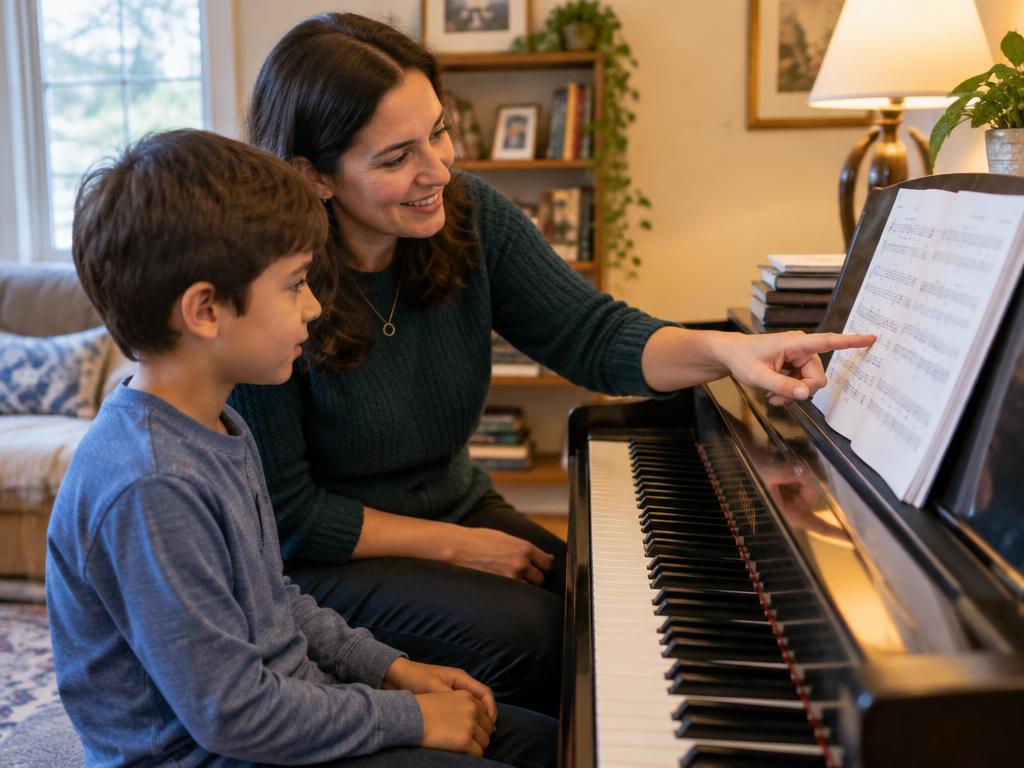
Two-handed playing asks the brain and body to manage several jobs at once. One hand may hold a longer note while the other moves, or the hands may play different rhythms. Start by understanding each part, then combine a small section slowly enough to notice where the movements align. Separating the hands can help, but eventually the relationship between them needs its own focused practice. Identify the exact beat where confusion begins instead of restarting a whole page.
Coordination also includes listening for balance. A melody may need to stand out above an accompaniment even when both hands play together. Later, pedal use adds another layer: clearing harmony, connecting sound, and avoiding unnecessary blur. Working on one variable at a time makes these tasks easier to evaluate. Difficulty coordinating a passage is information about the next practice step, not evidence that someone cannot learn. Carefully chosen fingering can make repeated attempts more consistent.
Not sure which instrument fits best for your Waltham student? Call us and we will help you decide.
Explore Genres Without Losing the Fundamentals
Different styles highlight different piano skills. Classical music often brings close attention to phrasing, articulation, and written detail. Pop accompaniment can involve recognizing chord progressions and maintaining a supportive rhythmic pattern. Blues introduces characteristic harmonic movement, melodic vocabulary, and feel. These are not isolated tracks: reading, listening, technique, and rhythmic awareness can support work across all of them. Comparing two versions of a phrase helps students hear how articulation or timing changes its character.
A familiar song may need a simpler arrangement before its original version is practical. Simplification can preserve a recognizable melody or chord structure while keeping the physical demands manageable. Students interested in chord-based playing on another instrument can also explore guitar lessons in Waltham. Comparing instruments can clarify musical interests, but piano progress still depends on attentive time at the keyboard. The next piece should offer a meaningful challenge without introducing every unfamiliar skill at once.
Prepare Your Keyboard and Practice Space
For in-home learning, a usable instrument and a comfortable setup matter more than an elaborate room. An acoustic piano should be in serviceable condition; a digital instrument should allow reliable control of notes and volume. Touch-sensitive keys respond to differences in playing force, while weighted keys more closely resemble an acoustic action. Ask about equipment suitability before making a purchase, particularly when comparing smaller keyboards with full-sized digital pianos. Mention any keys or pedals that are not working properly.
Keep music visible, provide stable seating, and make sure the student can sit without reaching awkwardly. A quiet practice area helps with listening for rhythm and tone. For Waltham households balancing school and commuting, a repeatable routine may be more useful than ambitious occasional sessions. Choose a small assignment, practice it carefully, and note where counting, fingering, or coordination becomes uncertain. Our in-home lessons page provides more information about learning in your regular practice environment.
Ready for your first lesson in Waltham? We will match you with a teacher who serves Waltham.
Contact Us About Piano Lessons in Waltham
Call (978) 430-8480, email info@newenglandmusiclessons.com, or visit Contact Us to discuss piano lessons in Waltham. Include the student's age range, previous experience, musical interests, and the piano or keyboard available at home. If you are returning after a break, mention what you remember playing and which skills now feel less secure. A short description of your goals helps frame the conversation without requiring you to choose a complete curriculum in advance.
Share several scheduling windows and ask about current availability, lesson arrangements, pricing, and relevant policies. Flexible scheduling is discussed during the enquiry rather than promised for particular days. If you are comparing instruments for yourself or a child, return to our Waltham music lessons hub to explore other local options. Visitors outside Waltham can review service areas. Confirm practical details before purchasing equipment or making plans around a recurring lesson time.
Ready to Start Music Lessons in Waltham?
A friendly teacher comes to your Waltham home on your schedule. Tell us who is learning and we will find the right match.
Frequently Asked Questions
Does my child need to read music before starting piano?
No. Reading can develop alongside listening, keyboard exploration, and basic rhythm. Early activities may involve identifying groups of black keys, copying short patterns, and recognizing simple notation. Readiness is broader than reading ability: following a short instruction, showing interest, and sitting comfortably also matter. Describe your child's experience and attention needs when discussing a starting approach.
Can adults begin piano without any musical background?
Yes. Adult beginners can start with note locations, rhythm, comfortable movement, and short pieces. Adults may understand explanations quickly while needing time for the hands to respond consistently. Set goals that fit your interests and available practice time. Comparing your progress with someone else's childhood training is less useful than tracking your own specific improvements.
Is a digital piano suitable for lessons?
A suitable digital piano can support learning, but models differ. Key size, touch response, weighted action, pedal options, and the number of keys affect what can be practiced. A small keyboard may limit some material even if it supports initial exploration. Share the model or specifications before buying or replacing an instrument, and ask what your planned learning requires.
Can I learn songs by ear as well as reading notation?
Yes. Listening and reading can complement each other. Working out a melody by ear develops attention to pitch relationships, while notation provides access to detail that may be harder to remember. Chord symbols offer another route into accompaniment. The balance can reflect your goals, but understanding rhythm and keyboard patterns remains valuable whichever method introduces a piece.
What should I practice when my hands will not work together?
Reduce the task until you can identify the exact point of confusion. Check each hand separately, count the rhythm, and combine only a few beats slowly. Notice where both hands play together and where one continues alone. Avoid repeating a long passage with the same mistake. Bring the difficult section to your lesson so movement and timing can be examined.
Book Music Lessons in Waltham, MA
Tell us who the lessons are for, which instrument interests you and when you are usually free. We will match you with a teacher who serves Waltham and get back to you quickly.