Playing drums brings movement, listening, and musical decision-making together. A beginner may be excited by a favorite beat but unsure how to coordinate both hands and feet. An experienced player may know patterns yet struggle to keep time when adding a fill. Private instruction creates room to examine those challenges, making drum study useful for children, teenagers, and adults with different starting points and reasons for learning.
New England Music Lessons offers personalized private, in-home and in-person lessons for Waltham students. Instruction connects hands-on work with rhythm, technique, coordination, and the music you want to play. Visit our general drum lessons page or the Waltham music lessons hub to compare options. Share your location, experience, equipment, and schedule when enquiring; current availability and practical arrangements need confirmation.
Start with a Setup That Supports Comfortable Movement
Before learning complicated beats, a drummer needs to sit and move comfortably. Seat height, distance from pedals, and the position of snare and cymbals affect balance and reach. A setup that works for an adult may be awkward for a child. Hands-on instruction helps a student notice unnecessary stretching or tension and adjust the playing position before compensations become familiar habits. Comfort is part of technique, not something separate to consider only after a problem develops.
Early stick work focuses on a relaxed grip, controlled rebound, and an even sound between the hands. Students compare quiet and louder strokes without assuming that greater volume requires constant force. Feet need similar attention: balance and controlled motion matter more than pressing harder. If you own an acoustic or electronic kit, describe it during your enquiry. Equipment and room considerations should be discussed before assuming a setup will suit lessons. Keep essential surfaces within comfortable reach.
Develop Coordination One Layer at a Time
Coordinating four limbs feels less mysterious when a pattern is separated into manageable pieces. A student might first count a pulse, then play one hand part, and only later introduce the other hand or a bass drum note. This is not a shortcut around coordination; it is how relationships become understandable. Slowing a pattern gives the brain time to connect movements instead of relying on a lucky run at full speed. Count through a short section before adding another layer.
Children respond to echo patterns, spoken rhythms, and combinations with a clear stopping point. Teenagers and adults use the same principles with music matching their interests. When a beat falls apart, the useful question is which two movements are colliding. Practicing that relationship separately is often more effective than restarting the entire pattern. Progress is measured by repeatable control, not how many limbs move at once. Each layer should remain comfortable when it rejoins the others.
Lessons come to your Waltham home on your schedule. Book a time that works for your family.
Keep Time Through Beats, Fills, and Transitions
A reliable drummer helps musicians understand the pulse and shape of a song. Counting measures, hearing subdivisions, and recognizing phrase lengths support that role. A beat played comfortably for a few seconds may become less stable over a longer section, especially when attention shifts to a difficult movement. Practice can include sustaining simple patterns long enough to hear whether the tempo drifts and whether the sound stays consistent. Pay attention to the spaces as well as the strokes.
Fills connect sections rather than interrupt time. Begin with a short fill, count through it, and return to the groove on the intended beat. Leaving space makes that return easier to hear. A metronome or suitable backing track provides a reference, but listening remains essential. Our bass lessons in Waltham page explores the bass's rhythmic role. Understanding this partnership helps drummers choose patterns that serve a song instead of competing with it.
Connect Hands-On Instruction with Sound and Technique
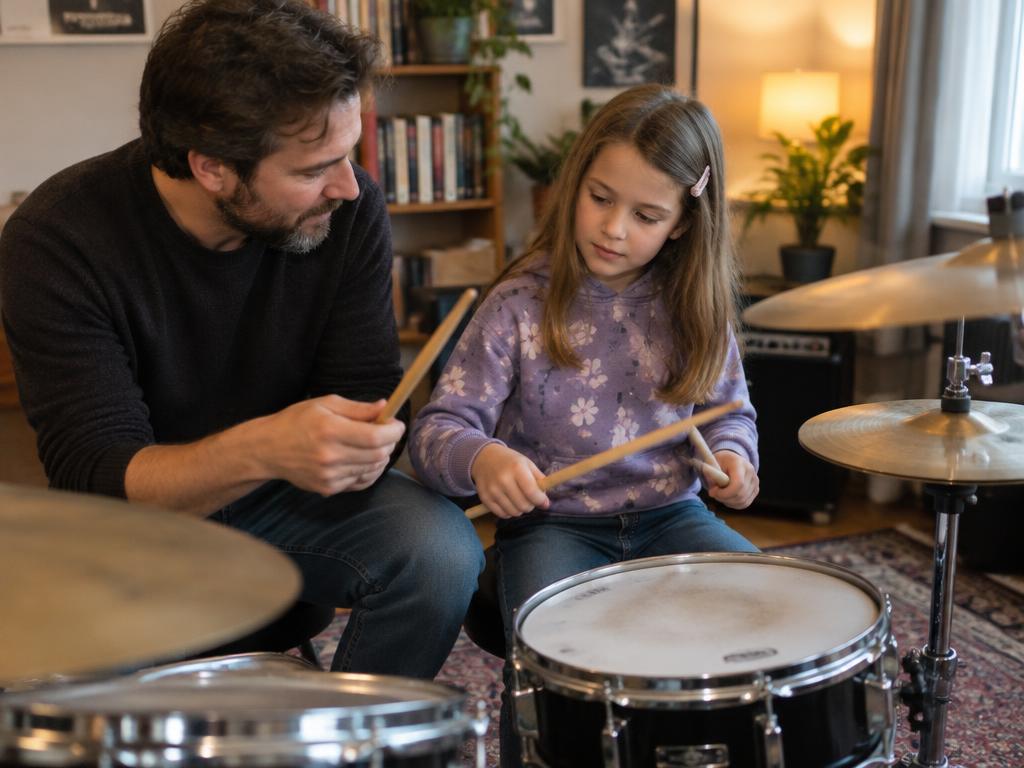
Drumming is physical, so explanations need to connect with what a student feels and hears. A teacher demonstrates a motion, listens to an attempt, and helps identify a smaller adjustment. That might involve allowing a stick to rebound, changing stroke height, or reducing tension during repetition. The purpose is not to copy a movement without understanding it, but to discover how controlled motion produces a dependable sound. Compare the result before adding more repetitions or speed.
Rudiments such as single strokes, double strokes, and paradiddles become meaningful through musical uses. A sticking pattern develops hand balance on a practice pad and later becomes a fill or accent around the kit. Dynamics deserve equal attention: playing softly with control is a real skill. As students advance, technique supports speed and complexity, but neither should come at the expense of comfort, timing, or hearing the rest of the music. Familiar patterns can be useful at several levels.
Not sure which instrument fits best for your Waltham student? Call us and we will help you decide.
Choose Musical Goals That Fit the Student
A child who wants to imitate a favorite chorus needs a different starting point from an adult returning after years away. Personalized instruction uses those interests while keeping underlying work clear. A simplified recognizable beat preserves a song's character without requiring every recorded detail. Listening for the backbeat, counting an introduction, or identifying the chorus turns song learning into a broader musical activity. The first goal can be small enough to complete and meaningful enough to invite another attempt.
Teenagers interested in playing with friends work on count-ins, repeated sections, endings, and recovery after mistakes. Adults may prefer keeping a groove through a complete song. Experienced students examine stylistic differences, subdivision changes, and accent placement. Families comparing instruments can explore guitar lessons in Waltham. Choosing drums should reflect interest in rhythm and sound rather than an assumption that drumming is only about energy or volume. Listening carefully matters at every stage of development.
Create a Practical and Considerate Home Routine
Home practice requires thought about sound, space, and people nearby. Acoustic kits, electronic kits, and practice pads offer different experiences; none is a universal solution. Electronic drums still produce physical impact noise, while a pad cannot reproduce every part of a kit. Discuss the room and equipment before purchasing. Safe listening levels and appropriate hearing protection deserve attention whenever sound becomes loud. Consider adjacent rooms and shared floors as well as the sound heard through headphones.
A useful session combines a technique task, a coordination challenge, and a musical application. Work on even hand strokes, isolate a difficult bass drum placement, and use that movement in a groove. Short recordings make rushing or uneven accents easier to notice. A parent supports a child's routine without becoming the technique instructor. For adults, a clear, limited task is easier to sustain than an open-ended instruction to practice more. Build a repeatable routine before increasing its demands.
Ready for your first lesson in Waltham? We will match you with a teacher who serves Waltham.
Contact Us About Drum Lessons in Waltham
Call (978) 430-8480, email info@newenglandmusiclessons.com, or visit Contact Us to discuss drum lessons. Include the student's age range, previous experience, Waltham location, and possible lesson times. Explain whether you have an acoustic kit, electronic kit, practice pad, or no equipment yet. If your concern is coordination, reading rhythms, songs, or returning to playing, mention it. A clear description frames the conversation around actual needs instead of assumptions about what a drummer should want.
Ask about current in-home and in-person availability rather than assuming a teacher or appointment is open. Discuss the teaching space, equipment expectations, sound considerations, pricing, policies, and a realistic practice approach. If you are enquiring from a nearby community, our service areas page gives a broader location overview. Establish workable arrangements so lesson time focuses on attentive listening, comfortable movement, and steady development of control. Any questions about equipment should be raised before making a purchase.
Ready to Start Music Lessons in Waltham?
A friendly teacher comes to your Waltham home on your schedule. Tell us who is learning and we will find the right match.
Frequently Asked Questions
Can children begin drums without previous music lessons?
Yes. Beginners start with listening, copying rhythms, counting, and comfortable stick movement. Readiness involves attention, interest, and a suitable setup rather than prior study alone. Share your child's age and experience when enquiring so the starting approach can be discussed. Short, clear tasks can help a young learner connect movement with an audible result.
Do I need a complete drum kit before contacting you?
No. Contacting us before buying equipment lets you discuss goals, space, and lesson arrangements. A practice pad supports some hand exercises, but does not replace every kit function. Confirm equipment needs before purchasing. Explain any noise restrictions or space limitations so those practical issues can be considered alongside what the student wants to learn.
What if I cannot coordinate my hands and feet?
Coordination is something to develop, not a prerequisite. Patterns can be separated into smaller relationships, practiced slowly, and rebuilt gradually. Experienced players use this approach for unfamiliar grooves too. A manageable tempo and clear counting are more useful than repeatedly forcing a difficult pattern. First identify which movements need to happen together or separately.
Can adults take drum lessons as complete beginners?
Yes. Adults can work on technique, timing, and songs without childhood musical experience. Lessons focus on realistic goals and a practice routine fitting other responsibilities. Returning players can revisit fundamentals while identifying skills they want to improve. You can begin with manageable patterns and build complexity as coordination and listening become more reliable.
Can lessons take place in my Waltham home?
New England Music Lessons offers private in-home and in-person instruction. Ask about availability for your address and schedule, and describe your equipment and space. A particular time, teacher, or setup should be confirmed rather than assumed. Discuss sound considerations and practical requirements before arranging the lesson so the space supports comfortable and focused learning.
Book Music Lessons in Waltham, MA
Tell us who the lessons are for, which instrument interests you and when you are usually free. We will match you with a teacher who serves Waltham and get back to you quickly.